

An end of week recap

“It was an American who said that while a Frenchman’s truth was akin to a straight line, a Welshman’s truth was more in the nature of a curve, and it is a fact that Welsh affairs are entangled always in parabola, double-meaning and implication. This makes for a web-like interest...”
– Jan Morris
Our Irish cousins celebrated St Patrick’s Day on 17th March, so I thought you may enjoy a light-hearted article that appeared in Nation Cymru discussing the “Celtic world’s most iconic figurehead[‘s]” connections with Wales: The story of St Patrick the patron saint of Ireland… from Wales. I can’t help but imagine a leprechaun riding on the back of a red dragon – a unique image for a new flag celebrating the close ties between Cymru and Éire perhaps?
I hope those celebrating St. Paddy’s Day had a marvellous time and you haven’t woken up with a sore head this morning following a pint or two of Guinness last night. If you are still carousing: Yaki da!
As ever, this is a post in which I summarise books read, reviewed and currently on my TBR shelf. In addition to a variety of literary titbits, I look ahead to forthcoming features, see what’s on the nightstand and keep readers abreast of various book-related happenings.
CHATTERBOOKS >>
If you are planning a reading event, challenge, competition, or anything else likely to be of interest to the book blogging community, please let me know. I will happily share your news here with the fabulous array of bibliowonks who read this weekly wind up.
*Acquire a Zest for Zola *


* Week Three of Reading Wales *
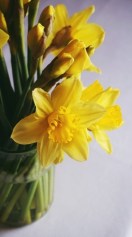

We wind up this week with The Crane, a poem written in 1958 by the Welsh poet, translator and painter Vernon Watkins. >> A Poem by Vernon Watkins >>
There is a dedicated page on which to display your Dewithon-related posts, which is where I link to all current contributions. Please keep popping back to stay abreast of the latest updates. >> Wales Readathon 2023 >>
Should you post any content relating to Dewithon on your blogs (or elsewhere), be sure to let me know.
* Irresistible Items *


Umpteen fascinating articles appeared on my bookdar last week. I generally make a point of tweeting (soon, perhaps, Mastodonning) my favourite finds (or adding them to my Facebook group page), but in case you missed anything, here are a selection of interesting snippets:
****************************


Wales Arts Review: Chase of the Wild Goose | Review – Norena Shopland explores the newly reprinted edition of Mary Gordon’s Chase of the Wild Goose, a part-novel and part-biography of the Ladies of Llangollen.
The New Yorker: The Novelist Whose Inventions Went Too Far – “After the Afro-Cuban writer H. G. Carrillo died, his husband learned that almost everything the writer had shared about his life was made up—including his Cuban identity,” learns D. T. Max.
Vanity Fair: Margaret Atwood on Loss and Storytelling – “For the release of her new story collection, Old Babes in the Wood, the author talks [to Keziah Weir about] Victorian murderesses, The Handmaid’s Tale’s TV adaptation, autofiction, the expectedness of death—and much more.”
The Critic: Orwell, Camus and truth – William Fear on “honesty as an attitude.”
Irish Examiner: Words of wonder: A look behind the scenes of Ireland’s thriving literary magazines – “The Moth may be departing, but there’s no shortage of other outlets for writers seeking publication. [Mary Morrissy shares the] profiles of a few of them.”
Bad Form: Miscommunication, Guilt and Human Connections – “There’s a word for the profound feeling of melancholy that strikes us when surrounded by people whose lives we have no impact on. Sonder. That’s exactly the feeling that Huma Qureshi’s Things We Do Not Tell The People We Love evokes,” writes Sadia Nowshin.
Air Mail: One for the Books – “To write [Once upon a Tome: The Misadventures of a Rare Bookseller] about Sotheran’s, one of the oldest bookshops in the world, a rare-book seller chased down the store’s elusive 18th-century origins.”
Ploughshares: Seeing Jenny in Why Didn’t You Just Do What You Were Told? – “The pleasure of reading Jenny Diski’s essays is in spending time with her persona—opinionated, funny, and endlessly curious. How can there be an end in wanting to know about Diski, her subjects, or any other example of what it is to be a human in this world?” reflects Rachael Nevins.


The Guardian: Hay festival to hold inaugural Eurovision book contest – “Submissions will be made by the public as books festival partners with famed music event for a literary showdown.”
ABC: Nobel laureate Kenzaburo Oe, writer of poetic fiction, dies – “Nobel literature laureate Kenzaburo Oe, whose darkly poetic novels were built from his memories during Japan’s postwar occupation and from being the parent of a disabled son, has died.”
BOMB: Tom Comitta by Crow Jonah Norlander – “Comitta’s The Nature Book is a literary supercut that collages together nature descriptions from hundreds of novels, creating an immersive narrative that moves from ‘joyous observation to hopeless desolation and back again.’”
Radio Free Asia: Tibetan writer confirmed serving a 4-year prison sentence – “Zangkar Jamyang criticized China’s move to drop teaching Tibetan in schools” – following his disappearance in 2020, it has recently been confirmed he is serving four years in prison.
3 Quarks Daily: When Your Backstory Is Wrong – The evolutionary history of our species negates and overturns all previous cosmologies, so why, asks Mike Bendzela, do so many fiction writers pretend not to notice and continue to cater to false backstories?
The National: Why more international partnerships are key for Arabic literature to thrive abroad – “The Abu Dhabi Translation Conference discussed the different ways regional and international publishers can work together.”
The Age: Sebastian Barry and the difficulties with loving Ireland – After two novels set in the US, the Booker-shortlisted novelist is back on familiar territory with Old God’s Time, a novel that touches on the dark stain on Ireland’s soul.
The Atlantic: The Librarians Are Not Okay – “I’ve been called a paedophile. I’ve been called a groomer. I’ve been called a Communist pornographer.”


Boston: What the Boston Athenaeum’s $17 Million Renovation Looks Like – 10½ Beacon Street’s “expansive revitalization makes the landmark library more interactive and inclusive while honouring its storied legacy.”
The Japan Times: Kazuo Ishiguro discusses remake of iconic Kurosawa film ‘Ikiru’ – In adapting a story about a Japanese official, the Nobel laureate had to dive into what it means to be British.
Financial Times: Nuruddin Farah: ‘I can live without my books. They make their own friends’ – “The Somali novelist on his ambiguous relationship with his homeland, embracing radical secularism — and why he refuses to tolerate intolerance.”
Cosmopolitan: Sorry, Bros, You Need Feminine Skills to Survive the Apocalypse – “Fans of mainstream sci-fi like The Last of Us believe that any hint of femininity means you’re not equipped for End Times (by zombies or by climate change). That’s just ridiculous,” says Sara Youngblood Gregory.
Arts Hub: Book review: The Bell of the World, Gregory Day – Erich Mayer describes Days’ new novel as an “historical fiction that also reads like a prose poem and a biography.”
Insider: Gen Zers are bookworms but say they’re shunning e-books because of eye strain, digital detoxing, and their love for libraries – Kate Duffy is pleasantly surprised to discover that Gen Z generally “prefer to pick up a printed book over an e-book.”
The Baffler: The Ghost at the Feast – “A recent biography of Jacob Taubes is haunted by his first wife’s novel,” finds Rachel Pafe.
The New Yorker: The Museum Director Who Stayed Behind to Defend Ukrainian Literature – “Putin has undertaken the systematic annihilation of the country’s identity and culture. Tetyana Pylypchuk and the staff of Kharkiv’s Literary Museum are fighting back,” says Masha Gessen.


The Hindu: How Tamil writer Sivasankari knitted India’s diverse literature in four volumes – “Writer and activist Sivasankari‘s magnum opus, Knit India Through Literature, a 16-year project completed in 2009, is set to be relaunched to familiarise her work with the younger generation.”
The Guardian: Surviving copies of Shakespeare’s First Folio to go on show – Harriet Sherwood reports that numerous events have been “planned in UK and Ireland, including a British Library exhibition, to mark 400 years since [Shakespeare’s] complete works [were] first published.”
Columbia University Press: Susan J. Wolfson on Mary Wollstonecraft and A Vindication of the Rights of Woman – Professor Susan J. Wolfson, an expert on the British Romantic era, declares Wollstonecraft’s seminal text “a work in progress, even now.”
The First News: Stolen manuscript of texts by Cicero returned to Polish library – “A manuscript containing works of Marcus Tullius Cicero, stolen from Poland in the 1960s or 1970s, has been recovered and returned to the University Library in the southern city of Wrocław.”
The Kathmandu Post: Literary responses to politics – The Nepali poet and playwright, Abhi Subedi wites: “Contemporary Nepali literature does not directly reflect the chaos in Nepali politics.”
The Millions: The Novels Behind This Year’s Best Adapted Screenplay Oscar Noms – Bill Morris examined three of this year’s contenders – all literary adaptions – and determined if the film versions held up to their source material.
The Harvard Crimson: Fifteen Questions: David Atherton on Japanese Literature, Creativity, and Remembering to Breathe – “The literary scholar sat down with [Benjy Wall-Feng] to discuss Edo-period writing and his experience returning to Harvard as a professor.”
Literary Hub: Jennifer Rosner on Crafting Evocative Historical Fiction That Honors the Past – “Natalie Jenner talks to the author of Once We Were Home,” an historical novel based on true stories of children stolen during wartime.
****************************
FINALLY >>
If there is something you would particularly like to see on Winding Up the Week or if you have any suggestions, questions, or comments for Book Jotter in general, please drop me a line or comment below. I would be delighted to hear from you.
Thank you for taking the time to read this post. I wish you a week bountiful in books and rich in reading.
NB In this feature, ‘winding up’ refers to the act of concluding something and should not be confused with the British expression: ‘wind-up’ – an age-old pastime of ‘winding-up’ friends and family by teasing or playing pranks on them. If you would like to know more about this expression, there is an excellent description on Urban Dictionary.